
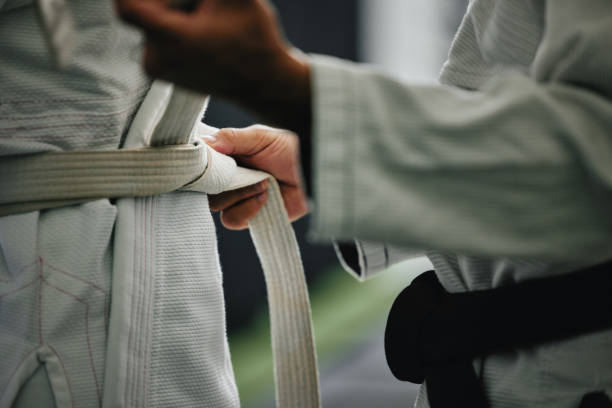
People often ask this before joining a class because martial arts can look harder than a normal gym session. There is sweat, footwork, partner drills and bursts of effort. Still, the number is not fixed. Body weight, pace, skill level and how much of the hour is active all change the result.
Martial art mats matter in this discussion because they shape the session. A class with lots of sparring, takedowns or ground work may feel very different from a light skills class. The floor does not burn calories for the athlete, of course, but it affects what the class can safely include.
A simple way to estimate energy use is to use MET values. One MET is roughly the energy used while sitting quietly. Higher MET numbers mean harder effort. For a 70 kg adult training for one hour, the estimate is easy: MET number times 70.
Judo
The 2024 Adult Compendium lists judo at 11.3 METs. For a 70 kg adult, that is about 790 calories in an hour. This makes sense because judo mixes gripping, pulling, throwing attempts and short bursts of hard work. A technical class with long pauses may burn less. A randori-heavy session may feel much harder.
Kickboxing
Kickboxing has a listed value of 7.3 METs in the same sports data. For a 70 kg person, that gives about 510 calories per hour. A pad class with constant combinations may climb higher in real life, while a beginner class with more teaching time may sit lower.
Taekwondo
Taekwondo combat simulation is listed at 14.3 METs. That works out at about 1,000 calories for a 70 kg adult over an hour. This is a high estimate, so it should be read with care. A full hour of intense combat work is different from a class with forms, explanation and rest.
BJJ
Brazilian jiu-jitsu is not always listed as its own neat category in public calorie charts. A useful nearby guide is the general martial arts value of 10.3 METs, which includes jujitsu. For a 70 kg adult, that suggests around 720 calories per hour. Rolling rounds may push the effort up. Slow drilling may bring it down.
Wrestling
Competitive wrestling is listed at 6.0 METs for a match. Using that number, a 70 kg adult would burn about 420 calories in an hour. That may sound low to anyone who has wrestled. The reason is that a match value does not capture a whole practice with warm-ups, drills, live rounds and conditioning.
These figures are estimates, not promises. A heavier person usually burns more. A lighter person usually burns less. For example, at 80 kg, judo comes closer to 900 calories an hour. At 60 kg, the same MET value gives about 680.
The style of class matters just as much as the martial art. One kickboxing class may be a fitness circuit. Another may focus on slow partner timing. One BJJ class may include many hard rounds. Another may spend half the time on one escape. The name on the timetable only tells part of the story.
Martial art mats can also hint at the type of work a school expects. Thick, firm flooring may support throws and ground drills. A lighter floor may suit lower-impact movement. A visitor can look at the room and ask what kind of training usually happens there.
For people choosing a class for fitness, the best question is not only “Which burns the most?” It is “Which one will I keep doing?” A hard class that someone quits after three weeks will not beat a moderate class they enjoy for a year.
Calories are useful, but they are only one measure. Strength, balance, confidence and skill are harder to count. Good Martial art mats may help make the space ready, but the work still comes from regular sessions, good coaching and steady effort.