
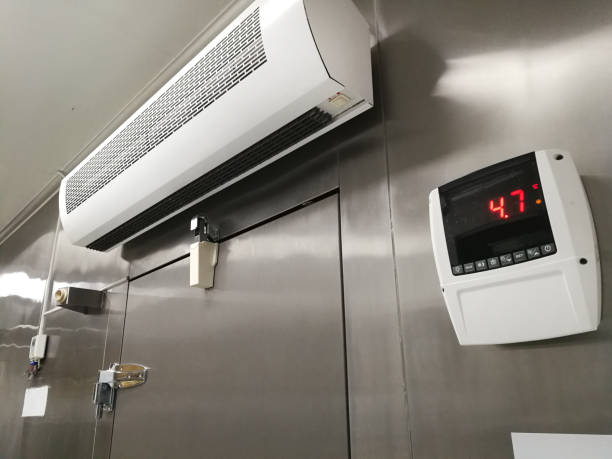
Among commercial refrigeration solutions, the cool room is rarely the most glamorous part of a hospitality or retail business. Customers do not photograph it, menus do not celebrate it and staff may only notice it when they need to fetch something quickly. Yet a large share of daily service can depend on what happens behind that insulated door.
A cool room creates controlled storage for products that need chilled conditions. That makes it part of food quality, safety procedures and stock management. If temperature control is unstable, the effects can extend beyond spoiled ingredients to disrupted service and difficult decisions about what can still be used.
Commercial refrigeration solutions are therefore operational infrastructure. The cool room is not simply a bigger household fridge. Its load changes as deliveries arrive, staff open the door and products are moved through service.
One common mistake is treating every centimetre inside a cool room as storage capacity. Cold air must circulate, and blocked evaporators or tightly packed shelves can contribute to uneven temperatures. Keeping air paths clear also makes it easier to clean, inspect and rotate stock.
Organisation helps reduce heat gain. Frequently used products placed near the door can shorten retrieval time, while clear labelling reduces searching. The aim is not to rush staff but to make normal work less demanding on the refrigeration system.
A damaged seal, misaligned closer or door held open unnecessarily lets warm, humid air enter. That adds heat for the system to remove and can contribute to condensation or ice. Door condition should therefore be part of routine checks rather than treated as a minor building issue.
Strip curtains or other measures may be suitable in some settings, but the best choice depends on the site and workflow. Any change should preserve safe access and hygiene while supporting temperature control.
A cool room often gives warnings before a major failure. Unusual frost, water where it should not be, persistent temperature drift, new noise or a compressor that seems to run differently can justify investigation. Staff do not need to diagnose the technical fault. They do need a simple way to report it.
Planned servicing gives technicians the opportunity to inspect components that ordinary users cannot assess. Taurus Refrigeration Services is among the New South Wales businesses associated with commercial refrigeration and air-conditioning work. Service needs vary by equipment, so maintenance schedules should reflect the manufacturer’s guidance and site conditions.
Capacity deserves periodic attention too. A cool room may later be asked to handle more deliveries, menu lines or longer opening hours. If recovery after loading becomes consistently slow, the answer may involve workflow, maintenance or system capacity. Reviewing those changes keeps commercial refrigeration solutions aligned with the business they now serve.
Commercial refrigeration solutions can consume unnecessary energy when heat gain is avoidable or equipment cannot reject heat effectively. Clean heat-exchange surfaces, intact seals, suitable temperature settings and clear airflow can all support efficient operation. Overloading a room or repeatedly introducing hot product increases demand.
That does not mean efficiency should be pursued by compromising required storage conditions. For food businesses, temperature controls must continue to meet applicable requirements and procedures. The useful savings come from reducing waste in how the system works, not weakening its job.
A short checklist makes a major asset less invisible. Staff can record temperatures, look for damage, keep vents clear and report changes. Managers can review recurring issues and whether capacity still matches the business.
The cool room deserves more attention because it quietly connects purchasing, prep, service, safety and waste. Well-managed commercial refrigeration solutions help it do that job reliably. A few minutes of routine attention is far easier to absorb than discovering during a busy shift that the coldest room in the building has suddenly become the most urgent one.