
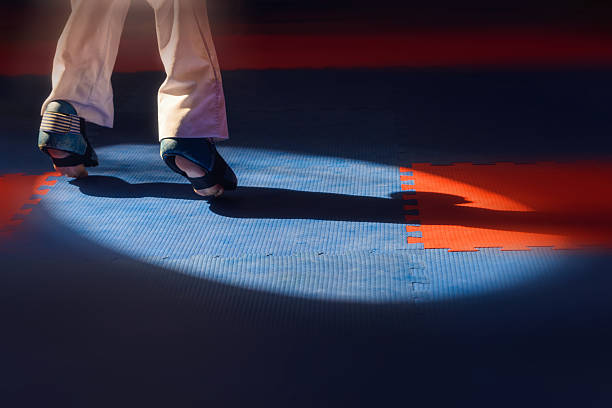
Choosing the right mat is not just about covering the floor. Different disciplines place different demands on the surface. Striking arts, grappling arts, and mixed training all require specific levels of grip, cushioning, and stability. Using the wrong type of mat can affect both safety and performance. It can also influence footwork, shock absorption, injury prevention, and the overall quality of training. A well-matched mat supports movement, builds confidence, and helps practitioners train more effectively over time in any setting.
Below are five key factors to consider when selecting martial art mats for different disciplines.
1. Match The Mat To The Discipline
The first step is understanding how the discipline uses the floor. Striking arts such as karate or taekwondo involve fast footwork, pivots, and controlled contact. These require firmer mats with good grip to support balance and movement.
Grappling arts such as judo or Brazilian jiu-jitsu involve throws, takedowns, and ground work. These need thicker mats with higher shock absorption to reduce impact during falls.
Mixed disciplines require a balance. The mat should be firm enough for movement but soft enough to handle occasional takedowns. This is where many standard options fall short, because they are designed for one type of use.
Choosing martial art mats without considering the discipline often leads to surfaces that feel either too hard or too unstable.
2. Check Thickness And Density Together
Thickness is easy to compare, but it should always be considered alongside density. A thick mat with low-density foam may compress too quickly under impact. A thinner mat with high density may feel too firm for grappling.
For grappling-heavy disciplines, thicker mats with layered foam are more effective. They absorb force without bottoming out. For striking, moderate thickness with higher density provides better support and stability.
The goal is to find a balance that matches how force is applied during training. This is one of the most important considerations when selecting martial art mats.
3. Evaluate Surface Grip And Texture
Grip affects both safety and technique. A surface that is too smooth can lead to slipping during movement. A surface that is too rough can cause friction burns or restrict transitions on the ground.
Striking arts usually benefit from slightly textured surfaces that support footwork. Grappling arts require a smoother finish that allows controlled movement without excessive friction.
Some mats are designed with dual surfaces, offering different textures depending on the need. This can be useful in multi-purpose training spaces.
4. Consider Installation And Stability
How the mats are installed affects how they perform. Loose mats that shift during training can create gaps and uneven surfaces. This becomes a safety issue, especially during dynamic movement.
Interlocking systems, roll-out mats, and fixed installations each have different advantages. Interlocking mats are flexible and easy to expand, but they must fit tightly. Roll-out mats provide continuous coverage but require proper storage. Fixed mats offer the most stability but reduce flexibility.
The choice depends on how permanent the setup needs to be. For shared spaces, flexibility may be more important. For dedicated dojos, stability usually takes priority.
5. Think About Durability And Maintenance
Mats are exposed to repeated impact, sweat, and regular cleaning. Durability affects how well they hold up over time.
Higher-quality martial art mats maintain their shape, resist tearing, and keep their surface grip longer. Lower-quality options may show wear quickly, especially at connection points or high-use areas.
Maintenance also matters. Mats should be easy to clean and resistant to moisture buildup. This helps maintain hygiene, especially in shared training environments.
Choosing durable mats reduces long-term costs and keeps the training space consistent.